

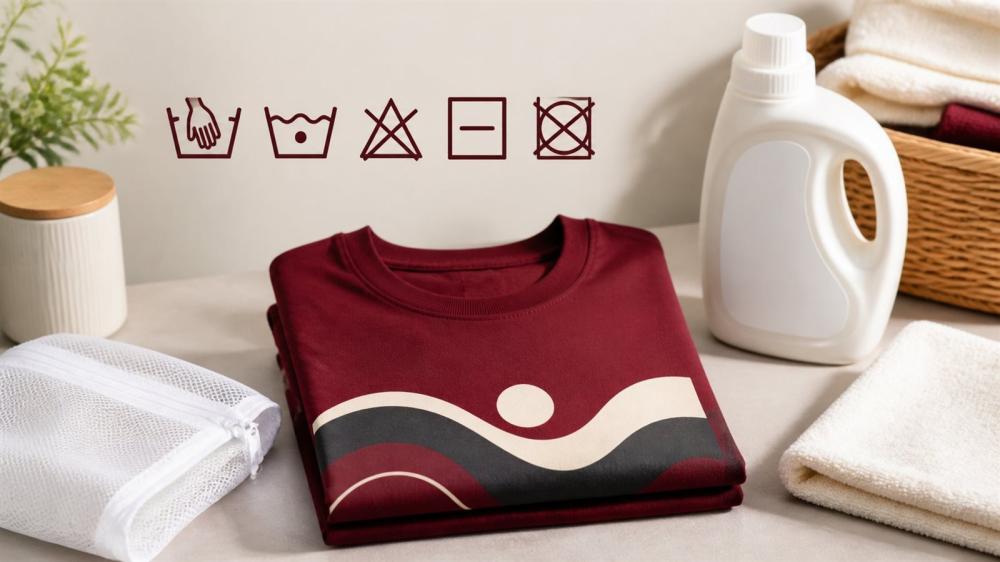
How to Keep DTF-Printed Clothing Looking Good After Washing
Proper care starts with the very first wash. High heat, friction, and bleach can shorten a print's life even when the printing itself was done well.
Before Washing
Read the garment and product instructions, and turn the clothing inside out so the print faces in. Zip up any zippers and avoid washing with rough items that could rub against the design.
During Washing
• Use cold or lukewarm water.
• Choose a gentle cycle.
• Use a mild detergent.
• Avoid bleach and harsh chemicals.
• Don't soak the item for a long time.
• Wash similar colors together.
Proper Drying
Air-drying in the shade is usually the gentlest option. Avoid direct high heat, and don't wring the printed area forcefully.
Ironing
Don't place the iron directly on the design. Turn the item inside out or use a protective barrier, and set the heat according to the fabric type.
Discover the Right Services
Browse fabric printing
Order team and business solutions
Storage
Keep the item dry and away from heat and prolonged sun exposure. Avoid always folding it along the same line, as this can press into the design's details.
Common Mistakes
• Washing with very hot water.
• Using bleach.
• Ironing the design directly.
• Drying with high heat.
• Scrubbing the print hard.
• Ignoring fabric instructions.
What Is DTF Printing and Why Does It Need Special Care?
DTF (Direct To Film) is a modern technique for printing designs on clothing and fabrics: the design is printed on a special film, coated with adhesive powder and then transferred to the fabric with a heat press. The result is vivid colours and fine detail on cotton, polyester and blends, on both light and dark fabrics. Although DTF prints are durable and handle washing well, the way you wash, dry and iron the garment decides how long the print stays like new. At ENJOY STORE we offer DTF fabric printing for individuals and companies, and here are detailed tips to keep it looking good.
The First 48 Hours After Printing
After receiving the printed garment, it is best to wait about two days before the first wash so the adhesive layer fully settles into the fabric fibres. Do not fold the garment tightly over the print area or store it somewhere hot or humid during this time.
Washing Guide by Fabric Type
- 100% cotton: wash in cold or lukewarm water on a gentle cycle, inside out.
- Polyester and sportswear: cold water, and avoid heavy fabric softeners that can affect print adhesion.
- Blends (cotton and polyester): the same rules as cotton, avoiding high heat.
- Tote bags: gentle hand wash or a short cycle, then air dry.
Can I Use a Tumble Dryer?
Natural drying in the shade is always best. If you must use a dryer, choose the lowest heat and take the garment out before it is completely dry. Repeated high heat is the main cause of cracking or lifting edges over time.
Caring for Uniforms and Team Clothing
Staff uniforms are washed often, so they need clear instructions. We advise companies, restaurants and cafés to print a small care card handed out with the uniform explaining how to wash and iron it. To plan uniform printing, read DTF printing for team uniforms, and for large quantities browse corporate and wholesale services.
Why Do Prints Sometimes Crack?
- Washing in very hot water or using bleach.
- Ironing directly on the design without a protective cloth.
- Repeated high-heat tumble drying.
- Stretching elastic fabric hard at the print area.
- Printing a very large design on a high-movement area such as tight sleeves.
Choosing a Design That Lasts Longer
Designs with very large solid colour areas can be less flexible than open or segmented designs. If the fabric is stretchy or moves a lot, a design with gaps that let the fabric breathe is a better choice. When printing several logos in different sizes, you can save cost by arranging them on one sheet, as in arranging DTF logos on a 100x30 sheet.
DTF for Clothing or UV DTF for Hard Surfaces?
Some customers confuse the two: DTF is for fabrics and is applied with heat, while UV DTF stickers are for hard surfaces such as mugs and glass, are applied with pressure and no heat, and are not suitable for clothing. For a full comparison, read the printing services comparison.
To order printing on your team or event clothing, browse fabric printing or send a custom request or price quote, and for graduation options see personalised graduation sashes.
Frequently Asked Questions
When should I wash the item for the first time?
Follow the product instructions and the recommended waiting period.
Should I use a washing machine?
Usually yes, with a gentle cycle and suitable heat.
Can I use a dryer?
Avoid high heat and check the item's instructions.
Why should I turn the clothing inside out?
To reduce direct friction on the print.
Is bleach suitable?
No, it can affect both the fabric and the print.
How do I iron the item?
From the inside, or using a barrier and suitable heat.
Do the colors change?
Improper care can cause them to fade faster.
Is hand washing better?
It can be gentle if done without heavy scrubbing.
How do I deal with a wrinkled print?
Avoid direct heat and consult the store before trying anything aggressive.
Do instructions differ by fabric?
Yes; cotton, polyester, and blends each have different properties.
Related reading:
- New Business Print Guide: Everything to Print Before You Launch
- How to Choose an Online Print Shop in Saudi Arabia: A Comparison Guide
Keep the Results Looking Great
Wash gently, dry without strong heat, and don't iron the design directly. These simple habits help extend the life of the print.
Browse Fabric Printing and Stickers in the store, and review the Gold Warranty before confirming your order.
© The content of this article is owned by ENJOY STORE, custom printing and stickers – enjoystore.sa. Copying or republishing it without written permission is prohibited.