
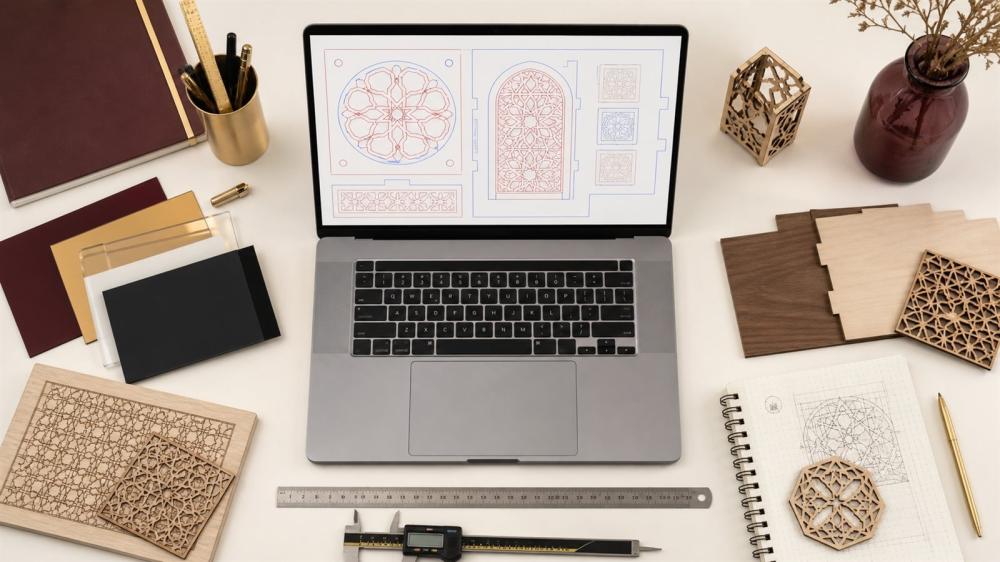
Preparing Laser Cutting & Engraving Designs: Lines, Paths, and Dimensions
Your laser file should clearly show what will be cut and what will be engraved. Repeated lines or fine details can lead to unexpected results.
◆ File Preparation
• Use SVG, AI, or a vector PDF.
• Convert text to paths.
• Separate cut lines from engraving lines.
• Remove duplicate lines.
• Write down the final dimensions.
• Account for material thickness and fine details.
◆ Before Approval
Review names, dates, holes, and bases, and test whether the piece can be assembled or hung.
◆ Explore Services
Browse laser cutting & engraving
Explore custom acrylic
◆ Frequently Asked Questions
Is PNG suitable? It's useful as a reference, but vector files are better for cutting.
What is a path? A line that defines the cutting movement.
Should I convert the font? Yes.
How do I separate cutting from engraving? With clear colors or layers.
Is a duplicate line a problem? Yes, it may repeat the process.
What's the minimum thickness for fine details? It depends on the material and size.
Should I include the size inside the file? Yes, and also write it separately.
Can an image be engraved? It depends on its quality and the material.
Do I need a sample? Recommended for complex designs.
What should I send? The file, material, thickness, size, and quantity.
◆ Next Step
Clean up the paths, confirm the operations and size, then approve one final version before production.
Browse Laser Cutting & Engraving and Custom Acrylic Products in the store, and review the Design Service Policy before confirming your order.