

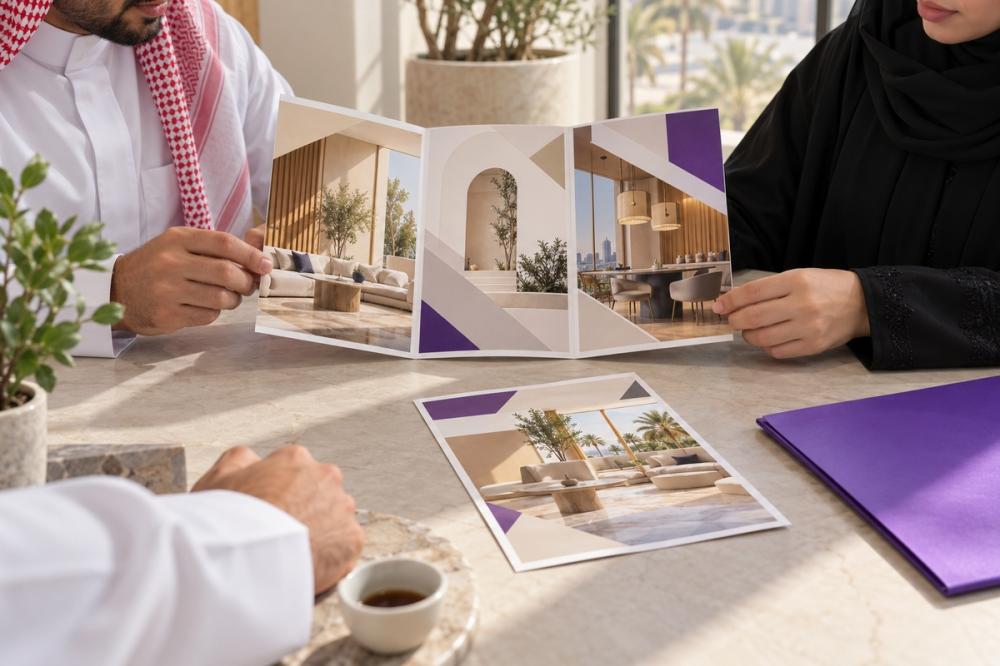
When you want to introduce your business or present your services on paper, the usual question is: should I print a brochure or a flyer? Both are printed marketing materials, but each has a different use and impact. In this ENJOY STORE guide we explain the difference, common sizes, when to choose each one, and design and distribution tips.
What Is a Flyer?
A flyer is a single sheet printed on one or both sides, carrying one clear message such as an offer, opening or event. It is low-cost and quick to distribute in large quantities.
What Is a Brochure?
A brochure is usually folded (bi-fold or tri-fold) and carries more detailed information about the company, its services and prices. It looks more professional and is used at meetings, exhibitions, reception desks and clinics.
Quick Comparison
- Format: a flyer is a single sheet; a brochure is folded into sections.
- Content: a flyer has one short message; a brochure has detail.
- Cost: flyers cost less in large quantities.
- Use: flyers for quick campaigns; brochures to present services and build trust.
- Lifespan: flyers are temporary; brochures are kept longer.
Common Sizes
- A5 flyer (14.8 × 21 cm): the most common for hand distribution and inside orders.
- A4 flyer (21 × 29.7 cm): for detailed offers and menus.
- A6 flyer (10.5 × 14.8 cm): small offer cards inside orders.
- A4 tri-fold brochure: about 10 × 21 cm when folded.
- A5 folded brochure: for short menus and clinic services.
When to Choose a Flyer
- A new shop or branch opening.
- A seasonal or time-limited offer.
- An event or exhibition invitation.
- An offer card inside online store orders.
When to Choose a Brochure
- Introducing a company, clinic or training centre.
- A service list with prices and packages.
- Folded menus for restaurants and cafes.
- Short company profiles for business clients.
Design Tips That Improve Results
- A headline that states the customer benefit, not just the company name.
- One strong image instead of many small ones.
- A clear call to action: call, scan, order now.
- A QR code to a specific page, not just the homepage.
- A 3 mm bleed and CMYK colours, as in the print-ready artwork guide.
For more ideas, read the paper prints guide for businesses and browse paper printing.
Order a Brochure or Flyer
Send the size, quantity, paper type and design through a custom request, or contact our corporate and wholesale services for large orders. You can combine them with your other prints in store and business printing bundles.
Brochure Fold Types
- Bi-fold: folded in half for four panels, ideal for short menus and extended invitations.
- Tri-fold: the most common, an A4 sheet folded into three for six organised panels.
- Z-fold: folds like a fan, great for steps or stages.
- Gate fold: two flaps open onto a large centre for a hero product or image.
- Booklet: several stapled pages for full profiles and catalogues.
Flyer Types and Sizes
- A5: practical for hand distribution and inside orders.
- A4: for detailed offers and price lists.
- DL (about 10 × 21 cm): fits envelopes, good for short offers.
- Square: an eye-catching shape for creative campaigns.
The Right Paper for Each
Flyers distributed in large numbers suit lighter coated paper to keep costs down, while brochures need slightly heavier paper that folds well and feels premium. For long-term use or table menus, add lamination. See the paper prints guide.
What to Put in a Brochure
- Cover: logo and a benefit-led headline.
- About us: a short paragraph on your experience.
- Services or products: with clear headings and bullets.
- Prices or packages: if fixed, or an invitation to request a quote.
- Testimonials or past work: to build trust.
- Contact: number, WhatsApp, website, QR code and address.
What to Put on a Flyer
A flyer needs more focus: a strong headline, the core offer, a reason to act now such as an end date, and how to order. Every extra word lowers the chance your message is read, so let the image and headline do most of the work.
Examples by Business Type
- Restaurants and cafes: an A5 flyer for an opening or new dish, and a folded brochure as a delivery menu.
- Clinics: a tri-fold brochure on services, doctors and hours.
- Schools and nurseries: an enrolment brochure plus a flyer for open days.
- Real estate: a flyer per project with photos, key specs and a QR code.
- Online stores: an A6 flyer inside orders with a next-order offer.
- Companies at exhibitions: a profile brochure or service booklet with business cards.
Where to Distribute Flyers
- Inside current customers' orders.
- At your exhibition stand.
- At the till or on tables.
- Through complementary shops in your area.
- In malls and offices with permission.
Measuring Flyer Success
Use a different QR code or discount code per campaign or location, then track usage to see which place or design works best and focus your budget there.
How Many to Print?
Street and exhibition flyers need larger runs, while in-order flyers match your monthly orders. Order brochures for several months if information is stable, fewer if it will change.
Common Mistakes
- Using a brochure for a quick offer, or a flyer for many services.
- Low-resolution internet images.
- Forgetting contact details or a QR code.
- Text too close to folds or trim.
- Typos in prices or numbers.
Summary
Choose a flyer for one quick message to many people, and a brochure to present your services in detail and build trust. In most businesses they work together: the flyer attracts, the brochure persuades and the business card keeps you in touch.
Designing a Brochure Step by Step
- Define the goal: company profile, one service, or a price list?
- Choose the fold: tri-fold for many services, bi-fold for short content.
- Write content first: plan headings and text for each panel.
- Choose images: real, high-resolution photos of your products or place.
- Apply your identity: the same colours and fonts as your logo.
- Follow reading order: front first, inside panels in sequence, back for contact.
- Request the fold template so text does not fall on folds.
Images and Colours
Invest in one strong image instead of ten small ones, use real photos of your products, team or premises to build trust, and keep colours consistent with one standout colour for the headline or call to action. Screenshots and web images are often too low-resolution for print; see the artwork preparation guide.
Printed or Digital Brochure?
A PDF brochure is easy to send by WhatsApp or email at no cost per copy, but competes with dozens of files on a phone. A printed brochure stays on the client's desk and feels serious and high-quality, especially at meetings, exhibitions and clinics. The best approach is a design that works for both, with a QR code on the printed version linking to the digital one or your website.
What Determines the Cost?
- Size: A4 costs more than A5 and A6.
- Paper weight: heavier paper and lamination add cost.
- One or two sides.
- Folding and stapling: extra finishing steps.
- Quantity: unit cost falls as quantity rises.
Brochures and Flyers in Integrated Campaigns
The strongest results come when print works with digital: a social ad announcing an opening offer, a matching flyer with a QR code to the offer page, a brochure in-store for detail and a thank-you card in every order inviting follows and reviews. One message and design across channels builds recognition and trust.
Writing Brochure Copy
- Write in the customer's language and focus on benefits.
- Use short sentences and bullets.
- Add a subheading to every section.
- Include real numbers such as years of experience or customers served.
- End with a clear call to action.
- Proofread before design; typos weaken trust.
Flyers Inside Online Store Orders
An A6 flyer inside orders reaches customers at peak interest, ideal for a complementary product, a next-order gift code or a review invitation, at very low cost. Combine it with a thank-you card and seal sticker as in the printed boxes guide.
Advice From the ENJOY STORE Team
Before approving a brochure, print a test on an office printer, fold it by hand and read it in order: does the cover grab attention, does the reader flow between sections, do words fall on folds, is contact clear on the back? For flyers, ask someone unfamiliar with your business to look for three seconds and tell you what they understood.
Make every marketing print answer the customer's key question: what do I gain? If it does, it becomes a reason to contact and buy rather than a sheet thrown away.
Related reading:
- Using QR Codes Effectively in Print and Packaging
- Trade Show and Event Printing Checklist for Businesses
- Business Cards: Sizes, Materials and Design Tips
- Banner and Roll-Up Sizes for Exhibitions and Shops: Design Tips
FAQ
Can flyers be printed on both sides?
Yes, and the back is ideal for details and contact information.
What paper suits a brochure?
A medium-weight coated paper that folds easily and keeps colours sharp.
Do you design brochures and flyers?
Yes. Choose the design service and send your content and logo.
© The content of this article is owned by ENJOY STORE, custom printing and stickers – enjoystore.sa. Copying or republishing it without written permission is prohibited.