

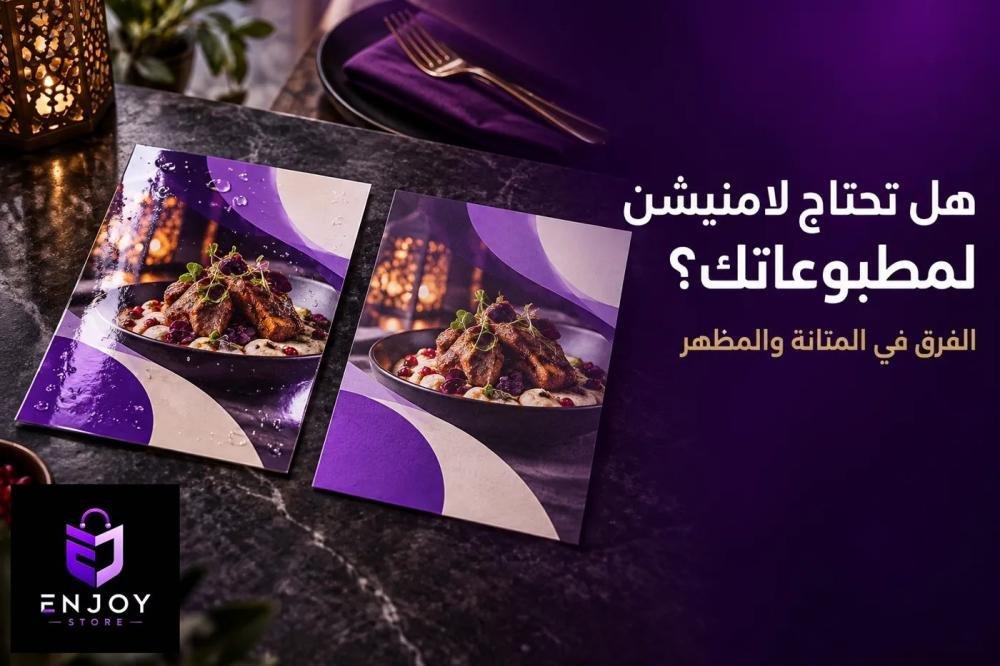
When ordering flyers or brochures you will see an extra option called lamination. Some customers always add it, others ignore it, but the right answer depends on how the print will be used. This guide explains what lamination is, how it changes durability and appearance, and when it is worth adding versus an unnecessary cost.
What is lamination?
Lamination is a thin clear plastic film bonded to the printed paper with heat and pressure. It does not change your design, but adds protection and a gloss that makes colours pop. The lamination we offer for flyers and brochures is a clear gloss film.
With vs without lamination
| Feature | Without lamination | With lamination |
|---|---|---|
| Look | Natural coated paper finish | Glossy with more vivid colours |
| Scratch resistance | Medium | Clearly higher |
| Fingerprints and stains | Show with heavy use | Easy to wipe |
| Light moisture and spills | Paper is affected | Better protection |
| Writing with a pen | Easy | Difficult on gloss |
| Cost | Lower | Added to the price |
| Lifespan | Short-term use | Much longer |
Gloss vs matte: what's the difference?
Two common lamination types exist in printing: gloss, which adds shine and colour saturation, and matte, which gives a soft, non-reflective feel. Gloss suits image-led marketing prints such as menus and offers, which is why we use it for our flyer and brochure lamination.
When do you really need lamination?
1. Menus and price lists
Menus are handled dozens of times a day and face drink spills and grease. Without protection they wear out fast and give a poor impression. Here lamination is a necessity. For a ready menu with a protective finish, see the folded A5 menu.
2. Company brochures
A profile that stays on a client's desk keeps its professional look much longer with lamination. Choose "with lamination" when ordering tri-fold brochures or bi-fold brochures.
3. Flyers posted or kept on counters
A service list on a shop wall or an offer flyer on a reception desk faces touching, dust and sunlight. Lamination extends its life and keeps colours clear.
4. Premium thank-you cards and order inserts
For premium brands such as perfumes and gifts, a glossy A6 insert reflects that premium feel.
When you don't need lamination
- Mass distribution flyers: read once, so protection adds cost without real benefit.
- Prints you write on: gift cards with handwritten names or stamp cards, as gloss makes writing and stamping hard.
- Very light paper: on 120 gsm the film may cause slight curling, so we recommend it from 150 gsm; see the paper weight guide.
- Short offers: a flyer for a one-week offer doesn't need to last months.
How to order lamination at ENJOY STORE
Brochures
Lamination is a direct option on the product page. When ordering tri-fold brochure printing or bi-fold brochure printing, choose "with lamination" and the price updates automatically.
Flyers
Flyer lamination is a separate add-on. Order your flyers first, A6, A5 or A4, then add flyer lamination to the cart with the same size and quantity.
Does lamination affect production time?
Production remains 1 to 3 working days after design approval, with fast shipping to all cities in Saudi Arabia. Since the film is applied after printing, check your proof carefully, as changes are not possible once laminated.
Design tips for laminated prints
- Dark, bold colours look deeper and richer under gloss.
- Avoid areas meant to be written on with a pen.
- Use 300 DPI images, as gloss highlights details and flaws; see preparing print-ready artwork.
- Test any QR code after printing under strong light; see using QR codes in print.
Quick examples by business
- Restaurant or café: laminate the menu and price list, not the delivery flyer.
- Clinic or salon: laminate the reception service list, not the monthly offer flyer.
- Online store: laminate premium thank-you cards, not instruction leaflets.
- Company: laminate the folded profile, not the event hand-out.
Is the extra cost worth it?
Divide the cost by the print's lifespan. An unprotected menu may need replacing every few weeks, while a laminated one lasts many times longer, so lamination actually saves money. A flyer read for seconds and thrown away gains nothing from it. The price appears instantly based on your selected options on the product page, so compare both.
Lamination and business cards
Business cards live in wallets and are handled often, so lamination is available as an option on business card printing, useful for dark designs or cards you want to last.
FAQ
What is lamination in printing?
A thin clear film bonded over printed paper to protect it from scratches, stains and light moisture and add gloss.
Does lamination make a flyer waterproof?
It protects against light moisture and small spills and is easy to wipe, but it is not meant for soaking or long outdoor use.
What is the minimum paper weight for lamination?
We recommend 150 gsm and up, as lighter paper may curl.
How do I add lamination to flyers?
Order the flyers, then add flyer lamination with the same size and quantity.
Can I write on laminated prints?
It is difficult with normal pens because the surface is glossy, so we don't recommend it for gift cards or stamp cards.
Does lamination add production time?
No, production is 1 to 3 working days after design approval.
The decision in one sentence
If your print will be handled a lot or kept for a long time, add lamination; if it will be read once, save the cost. Order now from paper printing; the price appears instantly based on your selected options on the product page. Questions? Message us on WhatsApp 0559899141.