

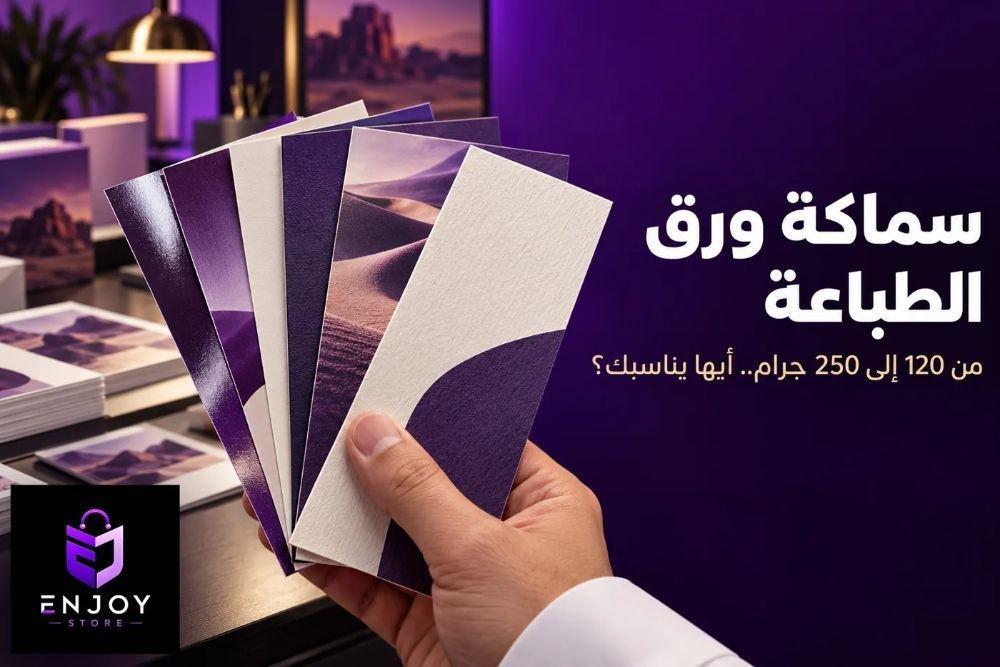
When you order flyers or brochures, you will see an option called paper weight with numbers like 120, 150 and 250 gsm. Many customers simply pick the cheapest or the heaviest without knowing the real difference. This guide explains what gsm means, the practical difference between each weight and which paper suits each type of printed marketing, so your print arrives with the feel and impression you want.
What does gsm mean?
GSM stands for grams per square metre: the weight of one square metre of paper. 120 gsm means one square metre weighs 120 grams. The higher the number, the denser, thicker and stiffer the paper. For reference, standard office paper is about 80 gsm, while business cards are usually printed on 300 gsm.
What is coated (gloss art) paper?
Coated paper has a smooth layer that makes colours more vivid and stops ink from spreading into the fibres, which is why it is the standard for flyers and brochures. We print our paper products on coated paper in five weights from 120 to 250 gsm.
Paper weight comparison table
| Weight | Feel | Best use |
|---|---|---|
| 120 gsm | Light and flexible | Mass distribution, street and exhibition hand-outs |
| 150 gsm | Medium and balanced | Everyday flyers and brochures, most popular |
| 180 gsm | Noticeably stronger | Important offers, company profiles |
| 200 gsm | Stiff, like light card | Flyers customers keep, price lists |
| 250 gsm | Premium, close to card | Thank-you cards, single menus, order inserts |
Each weight in detail
120 gsm: economical for mass distribution
Light and easy to fold, ideal when you want to hand out thousands of copies at the lowest cost, such as an opening campaign or exhibition hand-outs. Not recommended for prints customers keep, as it creases easily.
150 gsm: the most popular choice
A good balance of quality and cost, which makes it the usual choice for A5 flyers and tri-fold brochures. It is also the minimum weight we recommend if you want lamination.
180 gsm: a professional look
When the print represents your company in front of important clients, such as a company profile or a special offer, 180 gsm feels premium from the first touch.
200 gsm: clear stiffness
Great for price lists and flyers that stay on a desk or counter, resisting bending better than lighter weights.
250 gsm: the thickest and most premium
Closest to card stock and ideal for A6 order inserts, thank-you cards and single-page menus. For folded brochures we crease the paper before folding so the fold stays clean without cracking the colours.
Which weight for which print?
- Mass distribution flyer: 120 or 150 gsm, see A5 flyer printing.
- Order insert: 200 or 250 gsm on an A6 flyer.
- Price list or single menu: 200 or 250 gsm on an A4 flyer, with lamination if it is handled often.
- Tri-fold brochure or profile: 150 gsm for everyday use, 180 gsm and up for companies, see tri-fold brochure printing.
- Event programme or bi-fold: 180 to 250 gsm for a booklet feel, see bi-fold brochure printing.
- Business cards: need heavier stock than all of these; we print them on 300 gsm, see business card printing.
Is thicker paper always better?
Not necessarily. Thick paper feels better but costs more and is heavier to ship and hand out, and there is no need for it on a flyer read once. Ask yourself how long the print will stay with the customer: a minute means light paper, weeks mean heavier paper. The price difference between weights appears instantly based on your selected options on the product page, so compare before ordering.
Paper weight and lamination
Lamination is a clear protective layer over the print. On very light paper it can cause slight curling, so we recommend it from 150 gsm and up. Learn when you really need it in do you need lamination for your prints?
Tips before a large order
- Order the smallest quantity (100 copies) first if you are torn between two weights.
- Make sure your file is 300 DPI, because better paper also reveals weak images. See preparing print-ready artwork.
- If your brand relies on a detailed logo, read preparing your logo for printing.
How to judge paper weight by touch
If you have an old flyer you liked, compare it with familiar items: office paper is about 80 gsm, a glossy magazine cover is around 150 gsm, a light invitation card is around 250 gsm and a business card is about 300 gsm. Place your sample between these and pick the closest option on the product page.
FAQ
What does 150 gsm mean?
One square metre of the paper weighs 150 grams; higher numbers mean thicker, stiffer paper.
What is the best paper weight for flyers?
150 gsm is the most popular, 120 gsm suits mass distribution, and 200 to 250 gsm suits flyers customers keep.
What is the best weight for a tri-fold brochure?
150 gsm for everyday use and 180 gsm or more for premium company profiles.
Does 250 gsm paper fold well?
Yes, we crease it before folding for a clean fold without cracking.
Can 120 gsm paper be laminated?
We recommend lamination from 150 gsm and up, as lighter paper may curl.
How long does production take?
1 to 3 working days after design approval, with fast shipping to all cities in Saudi Arabia.
Order your print on the right paper
All our paper printing products let you choose the paper weight: A6 flyers, A5 flyers, A4 flyers, tri-fold brochures and bi-fold brochures. The price appears instantly based on your selected options on the product page; message us on WhatsApp 0559899141 if you need help choosing.